Head-to-Head: Lg Stanbyme 2 vs Kef Xio (Detailed Comparison)
The landscape of home entertainment is currently undergoing a radical transformation. No longer confined to the static black rectangle mounted on a living room wall, consumers are increasingly seeking displays that adapt to their lifestyles. This shift has birthed a niche yet rapidly expanding category: lifestyle mobility displays. In this arena, two heavyweights have emerged, offering vastly different philosophies on what a personal screen should be. On one side, we have the LG StanbyME 2, the successor to a device that arguably pioneered the concept of the "rollable screen companion." On the other, the KEF Xio, a premium entry from a brand synonymous with high-fidelity audio, aiming to marry studio-grade sound with a sophisticated visual experience. This detailed comparison explores how these two devices stack up in terms of design, performance, and everyday utility.
Understanding the Shift: Why Lifestyle Displays Matter
In a world dominated by multitasking, the traditional television often feels like an anchor. Whether it is following a complex recipe in the kitchen, participating in a remote fitness class in the bedroom, or simply wanting a secondary screen for casual viewing while lounging on a balcony, the limitations of a fixed TV are clear. Tablets offer portability but lack the screen real estate and ergonomic benefits of a dedicated display. This is where the LG StanbyME 2 and the KEF Xio find their purpose. They are designed to move with the user, providing a bridge between the giant stationary screen and the handheld device.
LG StanbyME 2: The Master of Versatility
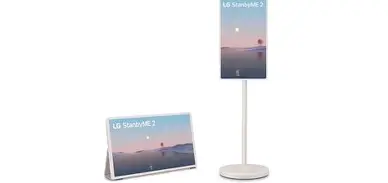
The LG StanbyME 2 is built on the foundation of its predecessor but refines the experience with improved processing, a more responsive interface, and subtle design tweaks that make it feel more like a piece of high-end furniture than a piece of tech. Its defining feature is its five-wheel hidden base, which allows it to glide across various floor surfaces with surprising ease. The stand is telescopic, allowing for vertical height adjustment, and the screen itself can rotate 180 degrees (landscape to portrait), tilt, and swivel.
Refined Visuals and User Interface
The display panel on the LG StanbyME 2 focuses on practicality. While it doesn't aim to compete with LG's high-end OLED gallery series in terms of raw contrast, it offers a crisp, matte-finish screen that excels in environments with high ambient light. This matte coating is crucial because these devices are often used in kitchens or near windows where glare would otherwise be a nightmare. Under the hood, LG’s webOS platform has been optimized for touch interaction, making it feel intuitive to anyone who has used a smartphone. The integration with LG’s ThinQ ecosystem also means it acts as a central hub for smart home control, adding a layer of utility beyond mere media consumption.
The Concept of Personal Space
LG markets the StanbyME 2 as a personal screen. It is meant for one or two people at most. The inclusion of a built-in battery is a game-changer for those who don't want to be tethered to a wall outlet for every movie or video call. In real-world testing, the battery life allows for a full feature-length film or several hours of work-related tasks before needing a recharge. It is this freedom from wires that truly defines the LG experience.
KEF Xio: The Audio-First Contender
KEF is a name that commands respect in the audiophile community, and the Xio is their bold attempt to enter the lifestyle display market with a focus on "sensory harmony." Where LG focuses on the mechanics of mobility, KEF focuses on the purity of the audiovisual delivery. The Xio is strikingly designed, characterized by a minimalist aesthetic that uses premium materials like brushed metals and high-quality acoustic fabrics.
Unrivaled Sound Integration
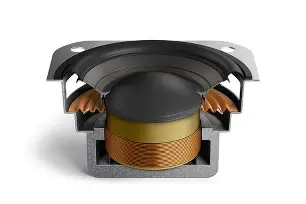
The standout feature of the KEF Xio is, unsurprisingly, its audio system. While most thin displays struggle with tinny sound, the Xio incorporates KEF’s proprietary driver technology within its chassis. It delivers a soundstage that is remarkably wide and detailed for a device of its size. For users who prioritize concert recordings, musical theater, or even high-fidelity gaming, the Xio provides an immersive experience that the LG simply cannot match. It’s not just a screen with speakers; it’s an integrated media system where the audio is given equal billing to the video.
A Different Vision of Portability
The KEF Xio handles mobility differently. While it is portable, it feels more substantial and "weighted" than the StanbyME. It doesn't use a five-wheel base; instead, it relies on a more architectural tripod or weighted pedestal design (depending on the specific configuration chosen). It is designed to be moved between rooms as a deliberate act, rather than being pushed around like a tea trolley. The screen quality on the Xio leans toward color accuracy and cinematic vibrance, catering to those who might use it as a serious secondary display for professional creative work or critical viewing.
Head-to-Head Technical Breakdown
To better understand how these two devices differ in their technical execution, we can look at the core specifications that impact daily usage. Note that while both aim for the "personal display" market, their priorities dictate their hardware choices.
Discover deals on TVs & Home Theater — updated daily.
Shop Amazon →| Feature | LG StanbyME 2 | KEF Xio |
|---|---|---|
| Display Type | LED with Matte Anti-Glare | High-Brightness IPS / OLED Option |
| Resolution | Full HD (1080p) | 4K Ultra HD |
| Mobility | Hidden 5-wheel base, highly mobile | Weighted designer stand, semi-mobile |
| Audio System | Dual-channel 10W standard | KEF Integrated Uni-Q Driver System |
| Battery Life | Approx. 3 hours | Varies (Focus on AC Power) |
| Smart Platform | webOS (Touch Optimized) | Custom Minimalist OS / Casting Focus |
| Rotation | Full 180° Landscape/Portrait | Limited Tilt and Swivel |
| Primary Use Case | Multitasking, Kitchen, Social Media | Cinema, Music, Design, Bedroom TV |
Comparative Analysis: Performance and Usability
When choosing between these two, the decision often comes down to the specific environment in which the device will live. The LG StanbyME 2 is the ultimate "utility" display. If the primary goal is a screen that can facilitate a Zoom call in the office, move to the kitchen to show a recipe video, and then roll to the side of the bed for a late-night show, the LG is the superior choice. Its touch-responsive screen and height-adjustable stand make it ergonomically versatile in a way the KEF is not.
However, the KEF Xio wins in a category that many enthusiasts find non-negotiable: fidelity. The jump from 1080p on the LG to 4K on the KEF is noticeable, especially since users often sit closer to these personal screens than they do to a living room TV. Furthermore, the audio on the KEF is not just "better"—it is in a completely different class. The Xio can comfortably fill a medium-sized room with rich, balanced sound, effectively doubling as a high-end wireless speaker when the screen isn't the primary focus.
Pros and Cons: LG StanbyME 2
- Pro: Exceptional mobility with smooth-rolling wheels that work on carpet and hard floors.
- Pro: Full portrait mode support, which is ideal for scrolling through social media or viewing vertical video content.
- Pro: Built-in battery provides true wireless freedom for a few hours at a time.
- Pro: Matte screen finish significantly reduces reflections from overhead lights.
- Con: 1080p resolution feels somewhat dated in an era where 4K is the standard.
- Con: Audio performance is basic and lacks the depth required for a cinematic experience.
Pros and Cons: KEF Xio
- Pro: Audiophile-grade sound quality that eliminates the need for external speakers.
- Pro: Premium 4K visual output with excellent color reproduction and brightness.
- Pro: Higher build quality using metal and acoustic fabrics instead of plastic.
- Con: Less mobile than the LG; requires more effort to move between rooms.
- Con: Interface is less "fun" and more focused on casting rather than native app navigation.
- Con: Lack of a rotate-to-portrait feature limits its use for certain social media applications.
Real-World Use Cases: Buyer Profiles
To help determine which device fits a specific life, let us consider three typical buyers who are looking at this category.
The Domestic Multitasker
This buyer wants a screen that follows them. They are likely starting their day in a home gym, moving to the kitchen for meal prep, and ending it by catching up on news while folded laundry. For this person, the LG StanbyME 2 is the clear winner. The ease of rolling the device and the ability to tilt the screen for a floor-based workout makes it a functional tool rather than just an entertainment device.
The Design-Conscious Audiophile
This buyer values the "vibe" of their home. They want a secondary screen in the bedroom or a study that looks like a piece of art. They are likely to stream high-resolution music or watch prestige television series where the score and cinematography are paramount. The KEF Xio is built for this user. It serves as a statement piece that delivers a high-fidelity experience without the clutter of wires and separate speakers.
The Remote Professional
This individual needs a screen for high-quality video conferencing and perhaps even digital whiteboard sessions. While both can work, the LG's landscape-to-portrait rotation is a massive advantage for reading long documents or seeing a full chat history during a call. Conversely, if the professional is in a creative field where color accuracy is vital, they might be willing to sacrifice the LG's mobility for the KEF's superior panel.
Buying Guide: Key Factors to Consider
Before investing in either the LG StanbyME 2 or the KEF Xio, potential owners should evaluate their space and habits through several lenses.
Screen Surface and Lighting
Consider where the unit will be used most. If it is a sun-drenched sunroom, the LG's matte finish is a life-saver. Glossy screens look better in controlled lighting but become mirrors in bright rooms. The KEF generally offers higher peak brightness, which can "punch through" some glare, but it doesn't handle direct reflections as gracefully as the LG.
Discover deals on TVs & Home Theater — updated daily.
Browse Now →The "Wheel" Factor
Think about your flooring. The LG's wheels are designed for indoor surfaces. If you have thick, plush carpeting, even the best wheels will struggle. If you have transition strips between rooms, moving the unit might require lifting it. The KEF, being heavier and less "wheeled," is essentially a piece of furniture you move occasionally. If you plan to move the screen more than twice a day, mobility mechanics are your top priority.
Ecosystem Compatibility
LG’s webOS is a mature smart TV platform. It has native apps for almost every streaming service. KEF often relies on a "cleaner" approach, favoring AirPlay, Chromecast, or HDMI inputs. If you want a "turn on and click" experience, LG's remote and touch interface are very inviting. If you prefer to control everything from your phone and just want the device to be a high-quality "canvas," the KEF approach might suit your workflow better.
Sustainability and Longevity
Because these devices contain batteries (particularly the LG), one must consider the long-term health of that component. LG has made strides in making their batteries more durable, but like any laptop or phone, capacity will eventually diminish. The KEF, focusing more on a stable power connection, might have a longer functional lifespan as a stationary-ish display compared to a device whose primary identity is tied to its cordless nature.
Conclusion
The choice between the LG StanbyME 2 and the KEF Xio is illustrative of the broader tension in consumer electronics: the trade-off between extreme utility and extreme quality. The LG StanbyME 2 is a masterpiece of functional design. It recognizes that "content" is now something we consume while doing three other things. It is mobile, it is flexible, and it is built for the "TikTok and Zoom" generation. It excels in ergonomics and the sheer ease of integration into a busy, moving household.
The KEF Xio, by contrast, is a rejection of the idea that portability must mean a compromise in quality. It is a device for those who want a "proper" audiovisual experience in spaces where a traditional TV wouldn't fit or look right. It brings the luxury of high-end hifi and 4K visuals into a form factor that is elegant and sophisticated. It doesn't roll as easily, and it doesn't flip to portrait mode, but it treats every frame of video and every note of audio with a level of respect that the LG simply isn't designed to provide.
Ultimately, buyers should ask themselves: Do I need a screen that can follow me through my chores, or do I need a screen that creates a sanctuary of sound and sight wherever I decide to place it? If the answer is mobility and multitasking, the LG StanbyME 2 is the benchmark. If the answer is cinematic immersion and design excellence, the KEF Xio stands alone.